Eighty-four years ago, Americans got their news from newspapers or the radio. There were 11,000 newspapers in the country offering detailed reports on the latest news. Ninety percent of American families owned a radio, which provided immediate, real-time updates on breaking news events. Newspapers and broadcasters relied on their own reporters and wire services like the Associated Press (AP) and United Press (UPI) for coverage.
The November 17, 1941, Salt Lake Tribune page-one headline boomed in large black letters, B-18 CRASHES NEAR PARK CITY. An 88th Reconnaissance Squadron bomber had gone down on a ridge two miles west of Park City shortly after midnight. Five army fliers had parachuted to safety, but two others were missing. Parties of townspeople were combing the rugged terrain in the vicinity of the crash for the two missing men: Major R.E.L. Pirtle and Sergeant J. D. Anderson. A 32-man search party with salvage equipment and an ambulance had been dispatched from Fort Douglas to Park City at 2:30 a.m.
Army authorities at first assumed a badly burned body found in the plane as that of Major Pirtle. Positive identification was difficult until Pirtle’s body was discovered on a hillside two miles east of the wreckage at 8:30 a.m. Referring to the body within the wreckage of the plane, Army authorities commented “this then must be Anderson.”
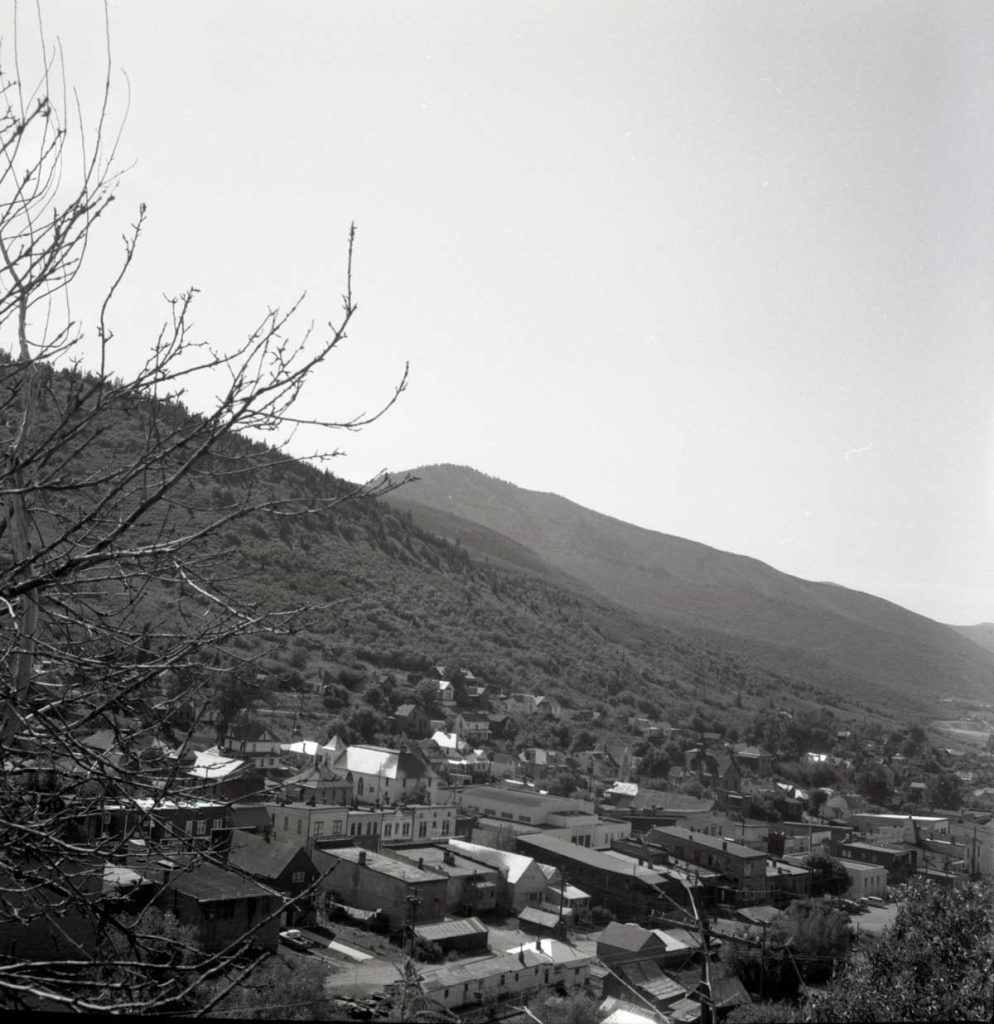
Credit: Park City Historical Society & Museum, Raye Ringholz Collection
The Associated Press and United Press wire services were quick to pick up the story and provide it to their newspaper and radio affiliates across the nation. Sergeant Anderson’s mother got the tragic news of her son’s death from a neighbor lady who was listening to the early morning news on Ogden radio station KLO.
Sigrid Anderson was home alone and downstairs doing laundry when her neighbor came running to the house and knocked on the back door crying, “Mrs. Anderson, Mrs. Anderson, Jack has been killed in a plane wreck!” Sergeant Anderson and his fiancé, Clothiel Nielson, had had breakfast with his mother in Ogden on Sunday morning before returning to the Salt Lake City airdrome. Jack’s flight jacket, dog tags, and wristwatch were later discovered in the debris.
Major Robert Pirtle’s wife Margaret and daughters Virginia, Sue, and Helen were in the family automobile driving just east of Denver when news of the accident struck them. In a recent interview, 89-year-old Helen related the details of the heartbreaking event:
“It was early Monday morning, and we had just left Denver. Mother was driving and Jody (Virginia’s nickname) was in the front passenger seat. Daddy had given us a Doberman puppy to protect us while he was away, and Sue and I were playing with him in the rear seat. The morning news was being broadcast on the car radio. Suddenly mother and Jody began to cry uncontrollably. Mother explained that Jody was crying from the pain of an injured foot and immediately stopped the car to make an urgent telephone call.”
Margaret and Jody Pirtle heard an AP story aired on Denver radio station KOA confirming that Major Pirtle’s body had been located. Needless-to-say, the Anderson and Pirtle families were overcome by the sad news from Park City that November morning.
This week marks 84 years since the tragedy.