Each year, the Park City Museum hosts the Glenwood Cemetery Tribute Event, formerly the Glenwood Cemetery Event with Ghosts, to bring the lives and stories of the families who were buried there back into public view. The theme this year is Death and Disaster: Terrible Ways to Die. The stories are no worse than usual for those concerned about the title.
There have been so many ways to die, both in and out of the mines, for people from Park City’s past. Medical knowledge and practices, the use of technology, and available medications were also not like what we have today. Many of the miners died of complications from miner’s consumption, which was a disease caused by fine silicate dust getting into their lungs. Other diseases that commonly caused deaths included pneumonia (no antibiotics), tuberculosis, the flu, and scarlet fever, among others.
Of course, diseases were just one way to die back then. Many miners were injured or killed in the mines. There were many accidents in the cages that took the miners up and down the vertical shafts. Think of having an elevator with no emergency brakes, no doors, and no back-up systems in case something went wrong. Many miners lost limbs, sustained lifelong injuries, or even lost their lives.
When talking about accidents in the mines, we also have to mention the Daly West explosion that happened in 1902, where thirty-four miners died from an explosion and subsequent gases that wafted through the tunnels. A powder monkey, a person responsible for blasting the rocks in the mines with dynamite, accidentally set the explosion off in the explosives storage area underground (was common to store dynamite underground at the time.) After the accident, Utah passed a new law saying that explosives had to be stored above ground – one of the first mining safety laws in the United States.
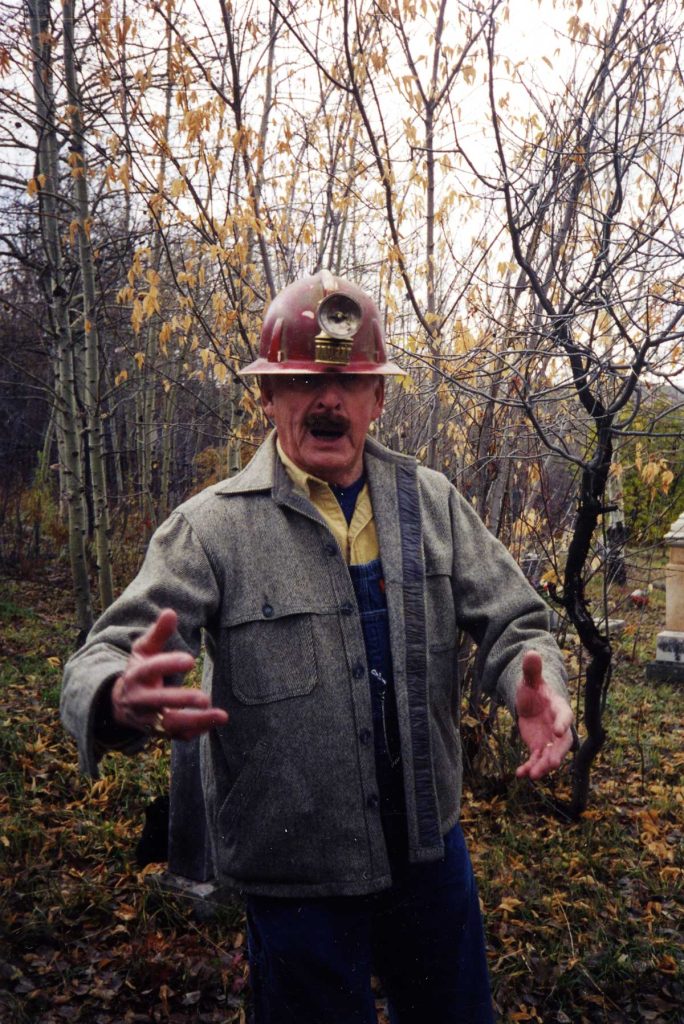
Credit: Park City Historical Society & Museum, Hal Compton Collection
There were also plenty of accidents outside the mines too. We have one person in the Glenwood Cemetery who was burned by an accidental stove fire in their home. At least another two died in wagon accidents. We are also portraying a person at this year’s event who died as a passenger in a car accident in 1912. Accidents were common back in the late 1800s and early 1900s, but properly taking care of the injuries from a medical standpoint was not.
Several veterans in the Glenwood Cemetery as well. Whether they died of injuries during or after a war, or lived a long life after returning from a war, their stories are important too. At this year’s event, we will be discussing the life and death of Ray Petersen, one of our most prominent soldiers in Park City history.
A few other ways to die back then included being a victim of murder, being executed for alleged crimes, or dying of natural causes. However the people died, they were buried in Glenwood Cemetery because their families were part of fraternal organizations that gave the members and their families health and death benefits. With insurance from the organizations, widows and children could carry on without a husband or father being there to support them financially.
Tickets for the Glenwood Cemetery Tribute Event scheduled for Saturday, October 11 with a rain date of Sunday, October 12 are on sale now! The tours are scheduled from 10:45 a.m. to noon or 12:45 p.m. to 2 p.m. To claim a spot and buy your ticket for the morning show, go here. For an afternoon slot, go here. Stories may not be appropriate for really young children. If you have any questions, please contact Diane Knispel at education@parkcityhistory.org or 435-574-9554.