This article is the first in a periodic series discussing one of the single most significant excavation projects in the Park City area – the construction of the Snake Creek Drain Tunnel.
My introduction to this historic site occurred in the fall of 2019. Steve Leatham, a fourth generation Parkite now residing in Heber City, arranged the encounter. It was a cool, cloudy, autumn day. I inquired about the origin of the creek’s name – though I had a pretty good idea. Our host explained that when the first settlers entered this canyon a thriving colony of rattlesnakes greeted them. Observing my nervous expression, Steve advised “not to worry,” there were no recent reports of venomous reptile activity. Despite such assurances, I kept a wary eye.
We walked to the sealed portal. The size was impressive. A trickle of water emanated from the barricaded entrance. Hard to believe that 110 years ago approximately 8,000 gallons a minute gushed forth. Equally intriguing, that the ensuing legal conflicts associated with “who owned” this water would eventually be argued before our nation’s highest court. Their decision, rendered in 1923, proved fundamental to determining water rights – not only in Utah but in other western states as well. It remains so today.
Scanning the immediate area, the rock debris field related to the excavation was stunning – even more so than the dormant entryway. It stretched as far as one could see. The detritus of a Herculean struggle to build the tunnel. Since the bore closed 105 years ago, nature is doing its best to repair the scarring. A peaceful, heavily wooded forest now thrives in the rocky landscape. I became curious as to the history of the Snake Creek Drain Tunnel. Surveying the scene I said to no one in particular: “tell me your story?” This series of articles explains some of tunnel’s stories.
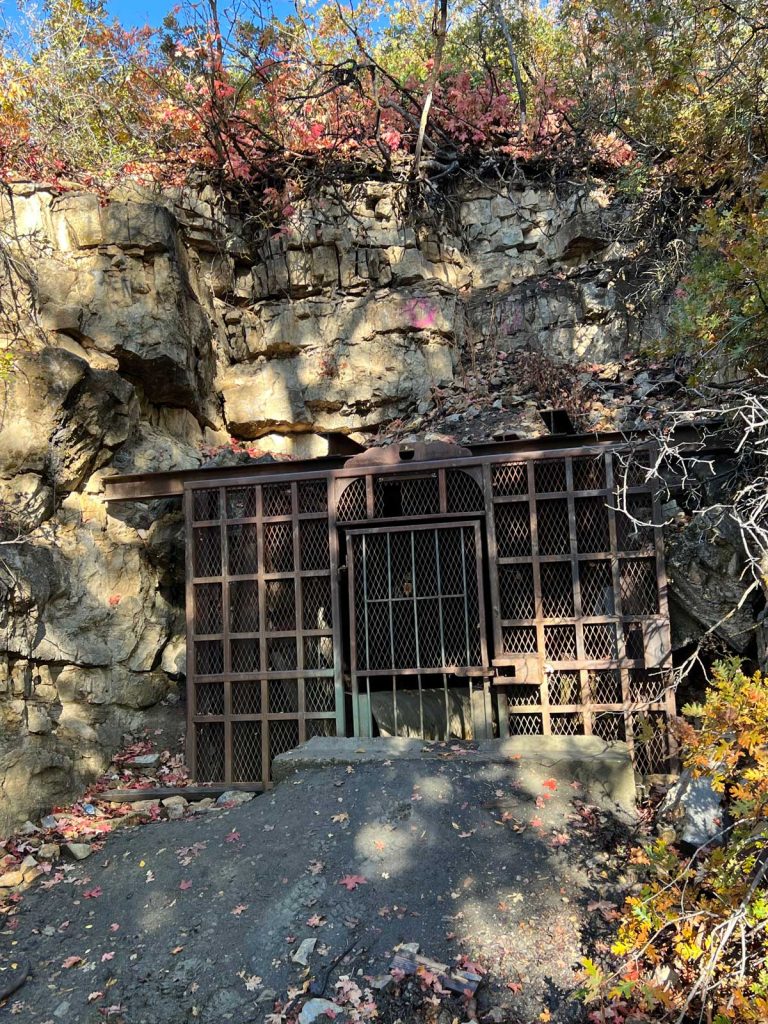
Credit: Courtesy of David Nicholas
The Daly-Judge mine was incorporated in 1901, and the quality and volume of its production quickly established the company as one of Park City’s premier mines. It soon rivaled the famed Silver King Coalition Mine and would do so for twenty years. Flush with cash, anything was possible – until it wasn’t.
The Daly-Judge pursued audacious expansion plans. Their to do list included constructing one of the largest drain tunnels in the Park City mining district, building the area’s first industrial scale electrolytic zinc smelter, and installing a state-of-the-art aerial tramway. As it related to the drain tunnel, the expected volume of water could be monetized both for the generation of hydroelectric power (a necessity for their zinc plant) and sold to the thirsty agricultural communities of Heber City, Midway, and Provo. Fulfillment of their grand vision depended on the drain tunnel.
Like most mines in the area, the Daly-Judge was bedeviled by water. A vast underground riparian ecosystem rendered their richest ore bodies inaccessible. Despair awaited unless the water issue was resolved. Fortunately, the Ontario Mine had set the example for mitigating this troublesome inconvenience. Beginning in the late 1870s, they built extensive dewatering systems using massive pumps and long, gravity-engineered tunnels to drain the water, the Keetley Drain Tunnel being their pièce de résistance. To this day it remains a vital liquid artery for the Jordanelle Special Service District.
The Daly-Judge envisioned building a tunnel and associated infrastructure the likes of which the mining district had never seen, greater than even the aforementioned Keetley Tunnel. Our next chapter reviews their colossal endeavor: the Snake Creek Drain Tunnel.
The author wishes to thank Steve Leatham and Clark Martinez for their invaluable contributions to this series.
The Park City Museum is hosting lectures on four of the next five Wednesdays. Read about each one here: https://parkcityhistory.org/events/.