When United Park City Mines decided to pivot and open a ski resort in town, Parkites were just happy for some good news. After federal funding for the resort came through, a sense of optimism coated the town. Bonanza Day in May of 1963 celebrated the coming resort and ended with a groundbreaking ceremony at what would become the resort base behind the old location for Miners’ Hospital.
And the resort opened to much fanfare from locals and other Utahns alike that December. But with the new resort eventually came a new crop of people, through the rest of the 1960s and through the 1970s. These newbies were something that old time Parkites, mostly blue-collar miners, had not thought of as a consequence of transitioning to a ski resort economy.
Ski bums and hippies steadily moved into Park City, completely changing the town’s culture by the 1980s. It wasn’t an easy transition, and it came with a decent amount of tension between the old and new residents. But there was cordiality and some silliness, too.
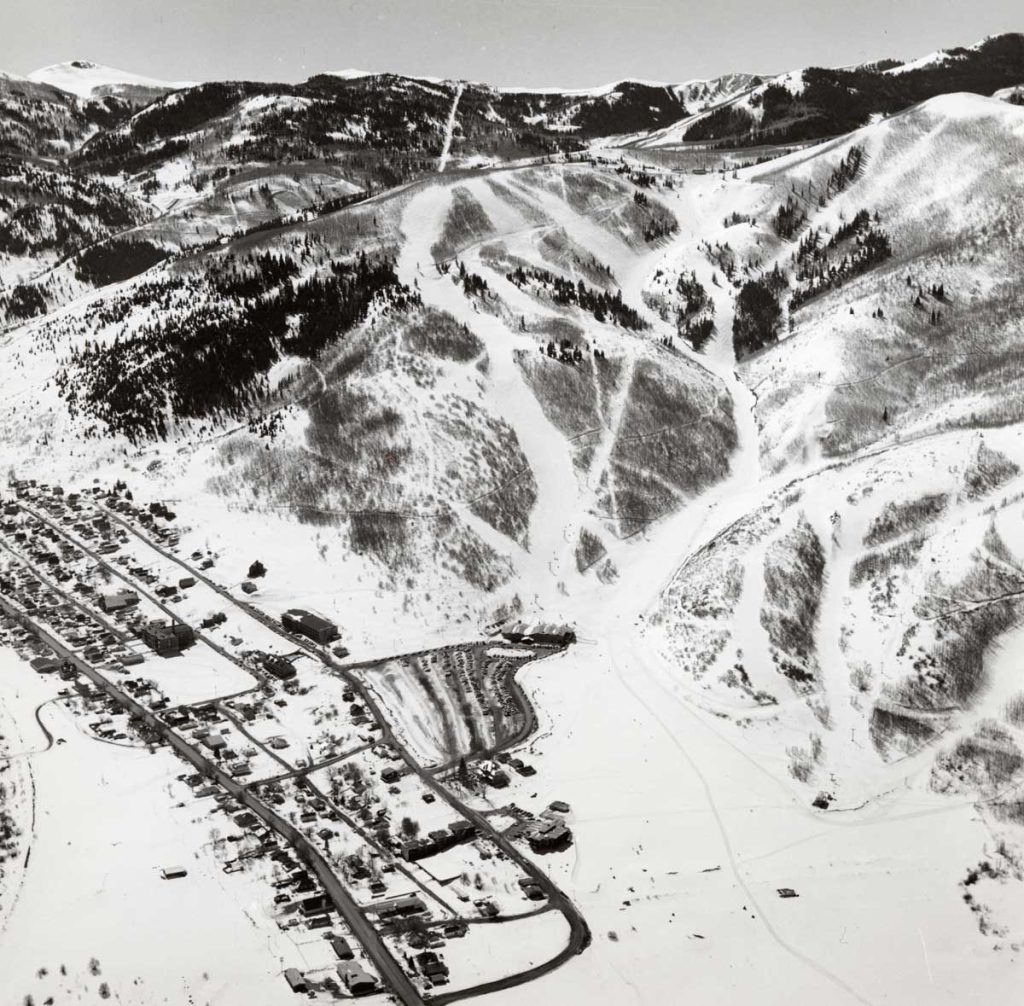
Credit: Park City Historical Society & Museum, Jordanelle Special Service District Collection
In 2013, town historian Gary Kimball sat down with media man Larry Warren for an oral history about Gary’s own life in Park City. He recalled those times, when the hippies came in and he had a choice to embrace or fight their presence.
Larry: And then you start getting ski bum-type people and then what did people think about the new residents? Their new neighbors?
Gary: Most of them didn’t see much of their new neighbors. Why, I shouldn’t say that, that’s a blanket statement because some people did like them. You know, they were kind of fun. Hell, I had some hippie friends that I thought were, you know, kind of neat.
The one opened the Leather Star on Main Street. Justin Allusion and his partner, Jesus Christ went into a City Council meeting and says; this is Jesus Christ and I’m Justin Allusion and we’d like to get a business permit for whatever business it was and I remember the Marshall, one time when I went to pay a bill or something at the City he was just stormin’ up a storm screaming almost saying “can you believe that, can you believe that they want a license.” We said: “believe what?” And he said: “well smell that.” And the form they filled out did reek of marijuana.
Larry: So the guy said his name was Justin Allusion? [Just an illusion]
Gary: And there was Charlie Brown and I don’t know who all.
Larry: I’ve heard the name Charlie Brown. What was he famous for?
Gary: I had a little store down here, a little corner grocery store: Grub Steak Grocery. Then one time… Bill Henrion, my partner, he brought in a whole bunch of mules or donkeys – jackass, whatever, burros.
Larry: Burros? Live animals?
Gary: No. Little [knick knacks].
Larry: Okay.
Gary: Then we hired Charlie Brown to label them and he could write “souvenir of Park City” in little gold paint and beautiful. He could do them just about as fast as I could sign my signature.
Ultimately, Gary decided to work with this new crop of Parkites, who were experiencing his hometown in a whole new way. The transition was not an easy one, but the Park City of today was shaped in large part by this period in our history, where the hard-scrabble miners met the happy-go-lucky ski bums.
If you have an interest in telling your Park City memories to the Park City Museum through an oral history interview, please contact Dalton Gackle at research@parkcityhistory.org or 435-429-1540.